ECO-CELL
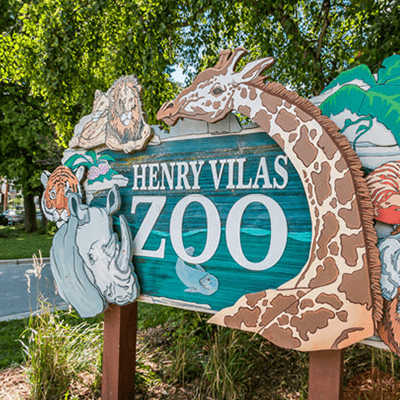
Friends of the Zoo is collecting used cell phones - and all their accessories - to raise much-needed funds for Henry Vilas Zoo and help the environment at the same time.
Reusable phones are sold "handset only" to companies that refurbish these phones and redistribute them into developing markets such as Latin America for use by first-time, low income users.
A portion of the workable phones are donated to local Hospitals for use by patients needing cell phones for emergency 911 calls. They are delivered by ECO-CELL with a charger and battery.
All non-reusable cell phone and accessories are recycled. ECO-CELL has a strict NO LANDFILL policy.
The
Friends of the Zoo
cell phone collection point is located at the
main gift shop all year round. You may also drop off cell phones at the Madison City/County Buildings or Affiliated Engineers (5802 Research Park Blvd). If your business would like to host an eco-cell box please email Emily at emily@vilaszoo.org.
Henry Vilas Zoo acheives Silverback Status
Henry Vilas Zoo has donated more than 2,000 cell phones and has now acheived "Silverback" status with Ecocell . Thanks for your contributions and support!
For more information, go to www.ecocell.org
Why Donate Your Old Cell Phone???
Mining Drives Congo's Gorillas Close to Extinction
Copyright © Reuters
NAIROBI (Reuters) - Mining in rebel-held eastern Congo is driving eastern lowland gorillas closer to extinction and destroying outstanding national parks, the World Wide Fund for Nature said.
Thousands of miners seeking the highly prized mineral colombo tantalite, known as coltan, have invaded and severely damaged the forests in the Kahuzi-Biega National Park and the Okapi Wildlife Reserve in eastern Congo, WWF said.
Coltan is used in high-tech products including mobile phones, micro-chips and nuclear reactors.
"The coltan mining activities in Kahuzi-Biega National Park and Okapi Wildlife Reserve are quickly driving the eastern lowland gorillas closer to the precipice of extinction," WWF said in a statement.
Kahuzi-Biega is home to one of the world's few remaining populations of the eastern lowland gorilla, one of three sub-species of gorilla, all of which are threatened.
WWF said the number of gorillas in the highland section of the park has halved to between 110 and 130 now from 250 in 1996. The situation in the lowland part of the park, where miners and militia groups roam freely, is not known.
Poaching and hunting have also all but eliminated forest elephants from the highland section of Kahuzi-Biega, WWF said.
Okapi Also Threatened
The Okapi reserve in northeastern Congo is the only protected area in the world for the animal it is named after -- a bizarre-looking relative of the giraffe, about the size of a zebra with a long neck and stripes on its rear.
The okapi is also under serious threat of extinction, according to wildlife experts.
WWF said industries buying coltan should boycott minerals taken from the two national parks.
"It is the responsibility of all involved, from the miners to the big multinational industries, to look beyond selfish gains and think of the community, national and international interests of the heritage sites," WWF Director-General Claude Martin said.
The area around the Okapi reserve in northeast Congo is controlled by Ugandan-backed rebels of the Congolese Liberation Front (CLF).
Kahuzi-Biega lies within the territory of a Rwandan-backed rebel group, the RCD, although sections of the huge park are believed to shelter enemy militia groups such as the Interahamwe, who led Rwanda's 1994 genocide.
Both the CLF and RCD are fighting to oust the Congolese government in Kinshasa, but a recent United Nations report accused them, as well as their foreign backers, of "mass-scale looting" of the Congo's natural resources, including coltan.
For more information, visit www.eco-cell.org
For more information on our Going Green interview, check out Channel3000
This March 2013 press release contains an updated list of Eco-Cell collection locations